

⚡ 2026 Paddle Tech: The 30-Second Summary
The Core Shift: 2026 has moved from basic honeycomb to Aramid-Carbon Hybrids and Gen 4 Foam Cores for better durability and reduced “core crush.”
Power vs. Control: Choose 13mm Thermoformed builds for maximum “pop,” or 16mm Cold-Molded builds for extended dwell time and finesse.
Surface Innovation: Toray T700 Raw Carbon remains the spin standard, while Titanium-Polymer composites prevent surface softening.
The Verdict: Match your paddle’s Moment of Inertia (MOI) to your playstyle—higher MOI for stability, lower MOI for hand speed.
If you’ve ever felt like your pickleball game has plateaued, you might be surprised to learn that the secret to improvement isn’t always in your technique. More often than not, it’s in the paddle you’re wielding. Gone are the days when choosing a paddle was as simple as picking a brand or relying on the “feel” of the handle. In 2026, the world of pickleball paddle technology has entered an era of precision engineering, where material science, structural integrity, and physics dictate performance.
From the honeycomb cores of the early 2000s to the advanced Aramid-carbon hybrids and Gen 4 foam cores of today, paddles are no longer just equipment—they are finely tuned instruments built to amplify your strengths and compensate for weaknesses. Whether you’re chasing explosive power, pinpoint control, or all-court versatility, understanding the technology inside your paddle can make all the difference.
In this article, we’ll explore the cutting-edge innovations of 2026, break down the materials and construction methods that define elite paddles, and provide a practical guide to selecting the right paddle for your playing style. If you’re ready to elevate your game and get an edge on the court, let’s dive into the science behind every smash, dink, and drive.
1. The 2026 Materials Revolution: Beyond the Honeycomb
For decades, polypropylene (PP) honeycomb cores dominated the pickleball market. Cheap, lightweight, and reasonably durable, they offered a decent balance of bounce and control. But as the pace of the game has accelerated and competitive players demand more, the limitations of honeycomb have become clear.
The Problem: Core Crush
Repeated high-velocity impacts gradually deform the plastic cells in traditional honeycomb cores. This leads to “dead spots”—areas of the paddle where the ball no longer springs off with the same energy. Over months of heavy play, even a well-loved paddle can feel sluggish and unresponsive.
The Solution: Aramid-Carbon Hybrids
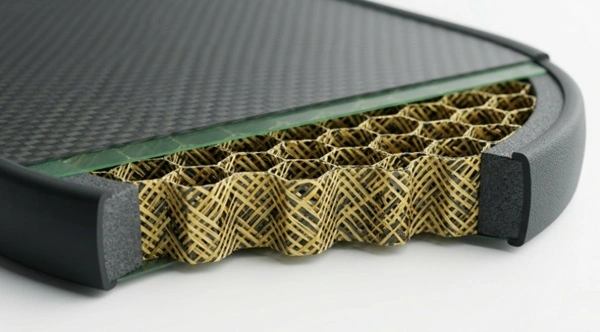
In 2026, the industry has shifted toward hybrid materials that combine Aramid fibers (commonly known as Kevlar) with carbon weaves. Pure Kevlar can sometimes feel too soft for aggressive hitters, while pure carbon can transmit excessive vibration. The hybrid weave strikes the perfect balance:
-
Fracture Toughness: Resists cracking and core collapse under repeated impact.
-
Vibration Dampening: Reduces hand fatigue on powerful shots.
-
Consistent Moment of Inertia (MOI): Improves stability on off-center hits, expanding the “sweet spot.”
Players report that these hybrids deliver a crisp feel and consistent power across the face, making them ideal for power hitters and all-court players alike.
Pro Tip: If your current paddle feels uneven or “dead” in certain areas, a hybrid Aramid-carbon paddle may restore performance without sacrificing control.
2. Thermoforming vs. Cold Molding: How Your Paddle Is Built Matters
A paddle’s core is only half the story—the assembly process can dramatically affect how it plays. In 2026, two primary methods dominate the market: thermoforming and cold molding.
Thermoforming: The Power Build
Thermoforming involves applying heat and pressure to bond the paddle’s face and core into a single, unified structure. Modern Gen 4 Thermoforming now uses Perimeter Forged Edges, which virtually eliminate delamination—a common concern in older paddles. The benefits include:
-
Maximum Power: The unibody structure transmits more energy to the ball.
-
Crisp Feel: Delivers a sharp “pop” on every shot.
Cold Molding: The Control Build
Cold molding, the traditional method, bonds layers at room temperature. While it lacks the raw power of thermoformed paddles, it provides:
-
Superior Vibration Dampening: Softens shocks from high-speed impacts.
-
Extended Paddle Dwell Time: The brief pause the ball stays on the face allows for finesse shots and precise cross-court dinks.
Core Thickness: Why 13mm vs. 16mm Matters
Thinner 13mm cores provide a stiffer surface for energy return (Power), while thicker 16mm cores absorb more impact energy, increasing the dwell time needed for precise placement (Control). This subtle difference in millimeters can completely change how a paddle feels in your hand and how your shots behave on the court.
Choosing Your Build:
-
Power Players: Lean toward thermoformed paddles with thinner cores for explosive hits.
-
Control Specialists: Cold-molded paddles with thicker cores offer a more forgiving touch and extended accuracy.
3. Surface Science: The Paddle Face in 2026
Beyond the core and construction, the paddle’s surface determines how the ball interacts with the face. In 2026, the emphasis has shifted from spray-on grit to engineered mechanical friction.
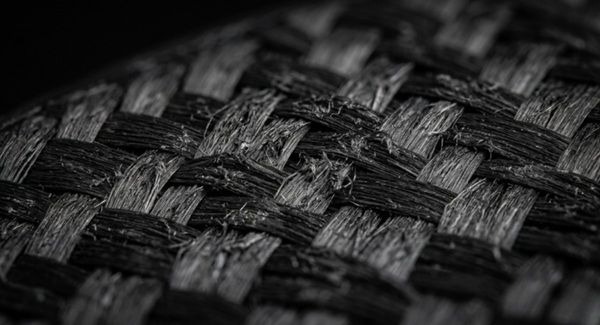
Toray T700 Raw Carbon Fiber
High-modulus Toray T700 carbon remains the gold standard. Its peel-ply texture, left from the mold, “grabs” the ball, improving spin and shot consistency. Players who rely on precise angle shots or advanced spin techniques often prefer this material.
Titanium-Polymer Composite
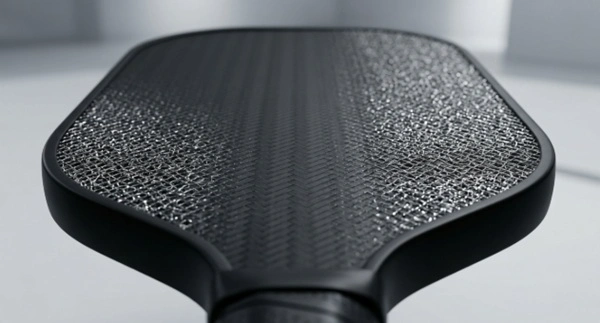
The latest innovation pairs carbon fiber with a Titanium-Polymer Composite, a molecularly bonded material that maintains energy return across hundreds of impacts. Benefits include:
-
Surface Memory: Retains energy return over an entire season.
-
Reduced Surface Softening: Maintains consistent feel even after hundreds of matches.
Technical Insight: PBCOR Compliance
The goal is optimized energy distribution within the legal parameters of modern tournament play, ensuring paddles deliver consistent performance without exceeding official speed limits.
4. The Gen 4 Foam Core Revolution
While honeycomb and hybrid cores have their strengths, foam cores have emerged as a game-changing alternative. By 2026, Gen 4 full-foam cores have replaced hollow cells with advanced EPP or MPP foams.
Why Foam Matters
-
No Core Crush: Foam resists deformation, even under thousands of impacts.
-
Muted Sound: Ideal for noise-sensitive communities.
-
Enhanced Durability: Lasts longer than traditional honeycomb paddles.
-
High MOI Stability: Reduces twisting on off-center hits.
These paddles are particularly effective for defensive players or those who play in pickleball communities with strict noise restrictions.
Pro Tip: If you’re frustrated by honeycomb paddles losing their “pop” after a few months, Gen 4 foam cores offer long-term performance without compromise.
5. Understanding Paddle Dwell Time
Dwell time—the moment the ball contacts the paddle face—is critical for control. In 2026, control-oriented paddles emphasize dwell time, while power-oriented paddles reduce it for faster ball exit.
-
Extended Dwell: Supports soft dinks, strategic placement, and spin control.
-
Shortened Dwell: Maximizes ball speed and explosive hits.
Selecting a paddle that matches your preferred dwell time allows you to control shot precision without sacrificing consistency.
6. Choosing the Right Paddle for Your Game
Power Hitter
-
Core Technology: 13mm Thermoformed
-
Surface Material: Raw T700 Carbon
-
Key Benefit: Maximum “pop” and exit velocity
Control Specialist
-
Core Technology: 16mm Aramid Hybrid
-
Surface Material: 100% Kevlar Weave
-
Key Benefit: Elite dampening and plush feel
All-Court Pro
-
Core Technology: 14mm Gen 4 Foam
-
Surface Material: Titanium-Polymer Composite
-
Key Benefit: High MOI stability and long-term durability
Reset Master
-
Core Technology: 16mm Foam-Injected
-
Surface Material: Raw Carbon Fiber
-
Key Benefit: Massive sweet spot for defensive play
7. Common Mistakes and Pitfalls
Even with advanced technology, players often make avoidable mistakes:
-
Ignoring Core Wear: Many assume a paddle lasts indefinitely. Honeycomb and older cores degrade quickly under heavy play.
-
Focusing Only on Face Material: A carbon surface won’t compensate for a weak core.
-
Buying for Power Only: Thermoformed paddles are exciting but unforgiving for beginners.
-
Neglecting Dwell Time: Short dwell paddles may undermine precise shots if used incorrectly.
Avoid these pitfalls by understanding both the paddle’s construction and your personal playing style.
8. FAQs About Pickleball Paddle Core Technology 2026
1. Can beginners use Aramid-carbon hybrid paddles?
Absolutely—but with a caveat. These paddles are crisp and responsive, which is fantastic for experienced players, but beginners may find them less forgiving than foam or cold-molded cores. If you’re just starting out, stick with a control-oriented hybrid or Gen 4 foam paddle. You’ll get a softer touch and more room to develop your swing without punishing off-center hits.
2. How long do Gen 4 foam cores really last?
Gen 4 foam cores are built to endure. With regular play, they can maintain peak performance for two to three years—or even longer—without losing their “pop.” That’s a big improvement over traditional honeycomb cores, which can start to develop dead spots after just a few months of heavy use.
3. Do titanium-polymer composite paddles improve spin?
Yes. This high-end composite adds subtle texture and “memory” to the paddle face. The result? The ball grips the paddle more effectively, spin is more consistent, and energy return remains reliable even after hundreds of volleys.
4. What’s the difference between thermoformed and cold-molded paddles?
Think of it as power versus control. Thermoformed paddles are like sports cars—they deliver explosive power and a crisp, lively feel. Cold-molded paddles are more like luxury sedans—they’re smoother, more controlled, and excel at finesse shots. Your choice depends on whether you prefer smashing winners or mastering delicate cross-court dinks.
5. How do I know if a paddle is PBCOR-compliant?
Most reputable manufacturers now clearly label their paddles as PBCOR-compliant. This ensures the paddle stays within official speed limits and delivers consistent energy across the face. If you’re unsure, check the spec sheet or ask the manufacturer for certified testing results. Playing with a compliant paddle keeps your game fair and predictable.
Conclusion: Engineering Your Game
Pickleball in 2026 is no longer just a game of reflexes and wrist action—it’s a science of precision. Understanding the interplay between paddle core technology, surface materials, and construction methods allows you to select a paddle that complements your style, enhances your strengths, and compensates for your weaknesses.
The most effective players are those who treat their paddle as more than a piece of equipment—it’s an extension of their game. From Aramid-carbon hybrids to Gen 4 foam cores and Titanium-Polymer Composite faces, the right paddle ensures consistency, durability, and enjoyment. By making informed choices, you’re not just playing pickleball—you’re harnessing decades of engineering innovation with every shot.
References & Further Reading
-
USA Pickleball. “Pickleball Paddle Specifications.” https://usapickleball.org/rules/
-
Pickleball Central. “2026 Paddle Technology Trends.” https://www.pickleballcentral.com
-
Toray Industries. “T700 Carbon Fiber Properties.” https://www.toray.com
-
DuPont Kevlar Technical Data. https://www.dupont.com/kevlar.html
-
Pickleball Magazine. “Foam Core vs Honeycomb: The Ultimate Comparison.” 2026 Edition.