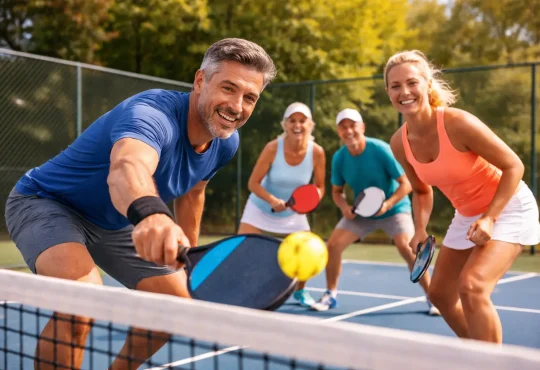


On a weekday morning, the pickleball courts at your local park are already alive. Paddles slide into a rack to hold a place in line. Strangers call out scores. Games rotate fast, laughter even faster. No reservations. No gatekeepers. Just play.
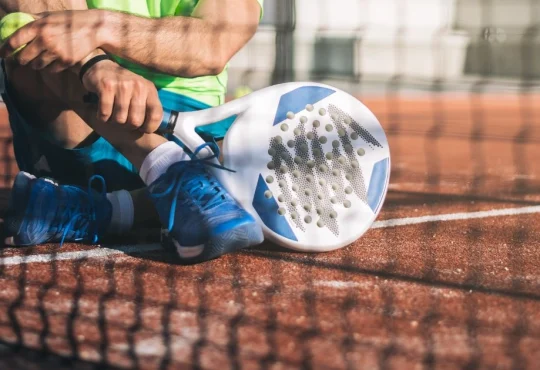
Across town that evening, a glass-walled padel court glows under LEDs. Four players arrive together. The court was booked three days ago through an app. Rallies stretch long, the ball ricocheting off tempered glass. Afterward, there’s coffee. Maybe networking. Definitely an analysis of that last smash.
This is Pickleball vs Padel 2026 in real life. Not a trend war. Not a social media debate. Two sports, two infrastructures, two different ways of structuring your time, money, and energy. If you’re between 25 and 44—balancing career, relationships, and fitness—your choice matters. This pillar guide breaks down cost, friction, gameplay mechanics, equipment risks, injury patterns, scalability, and long-term viability so you can decide with confidence.
Pickleball vs Padel — At a Glance
Not sure which sport fits your lifestyle? Here’s a fast, 60-second overview to help you decide.
Pickleball — The Social, Fast-Access Sport
-
Cost: Low annual expenses (~$600–$830/year including gear, balls, court fees)
-
Access: Walk to a public court or park; drop-in games available
-
Gear: Gen-4 full-foam paddle, 60 balls/year, court shoes, optional wrist support
-
Play Style: Quick, reflex-driven rallies; focus on placement, dink, volley, and serve
-
Social: Meet new players every session; casual, high-energy environment
-
Ideal if: You want fast, low-cost, social play that’s easy to fit into your weekly schedule
Padel — The Tactical, Club-Oriented Sport
-
Cost: Higher annual expenses (~$3,370–$3,800/year including club fees, racket, balls)
-
Access: Requires booking a club court and playing with 3 friends; structured environment
-
Gear: 18K carbon racket, pressurized balls, Padel shoes, protective eyewear
-
Play Style: Strategic doubles rallies using walls and angles; focus on positioning, wall rebounds, and teamwork
-
Social: Structured doubles, post-game rituals, smaller but close-knit groups
-
Ideal if: You enjoy strategic, endurance-based play, a premium club setting, and are comfortable investing in regular court time
Quick Takeaway
-
Pickleball: Low friction, casual, social, and U.S.-accessible.
-
Padel: High skill ceiling, tactical, club-driven, and internationally established.
The 2026 Landscape: Where the Growth Is Real
Pickleball remains the participation giant in North America. The Sports & Fitness Industry Association’s 2025 report places U.S. participation above 13 million players after multiple years of double-digit growth. Public courts, municipal conversions, and indoor warehouse facilities continue to expand supply.
Padel, meanwhile, operates from a different base. Under the International Padel Federation, the sport counts tens of thousands of courts worldwide, with Spain and Argentina among the most mature ecosystems. In the United States, growth is strongest in major metros like Miami, New York, Los Angeles, and Austin.
This isn’t a zero-sum fight. It’s parallel expansion:
-
Pickleball: Mass adoption, low barrier, public-forward.
-
Padel: Facility-driven, capital-intensive, globally established.
What Happens on Court (And Why It Feels So Different)
Understanding geometry clarifies everything.
Pickleball: Compact and Reactive
Court Dimensions: 20 ft x 44 ft
Boundary: Open
Key Feature: Non-volley zone (“kitchen”)
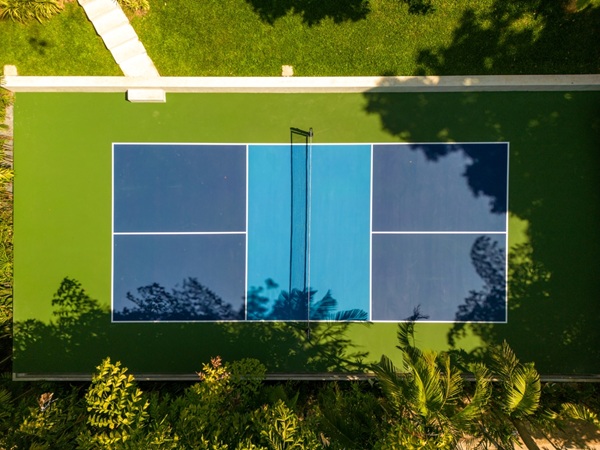
The smaller footprint compresses reaction time. You’ll spend significant time at the net trading fast hand battles. Points often hinge on touch control—soft dinks—before accelerating into quick finishes.
Movement is explosive but short-range. Reflexes matter more than long-distance endurance.
It’s easier to learn quickly. But mastery—third-shot drops, spin control, placement discipline—takes time.
Padel: Enclosed and Geometric
Court Dimensions: 20m x 10m
Boundary: Tempered glass enclosure
Key Feature: Walls are playable
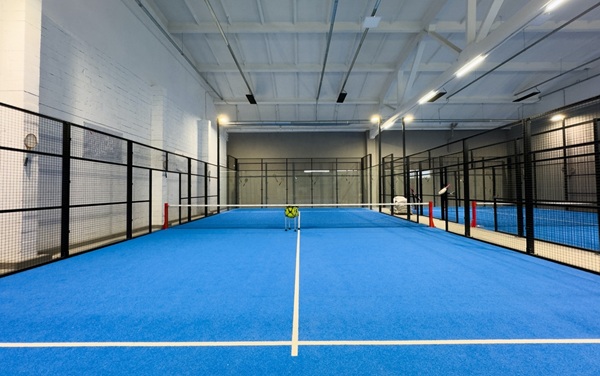
Padel changes physics. Defensive resets off glass extend rallies. Anticipation of angles becomes central. Points can last two to three times longer than pickleball exchanges.
Lower-body stamina matters. So does patience.
If pickleball feels like rapid improvisation, padel feels like controlled geometry under pressure.
Friction Score: How Hard Is It to Play Regularly?
Friction determines sustainability.
Pickleball Friction Score: 2/10
-
Walk-on access in many U.S. cities
-
Low gear cost
-
Minimal scheduling required
-
Downsides: crowding, noise regulations
Padel Friction Score: 8/10
-
Requires four players
-
Court bookings essential
-
Higher recurring fees
-
Upside: structured, consistent experience
Low friction encourages frequency. High friction can increase commitment—but also barriers.
The True Cost of Play: Annual Reality vs. Sticker Price
In 2026, the gap between “buying a paddle” and “actually playing the sport” has widened. If you are an active player (2x per week), your equipment is the smallest part of your budget. The real drain is Access and Consumables.
1. The “Hidden Taxes” of Pickleball
Pickleball is marketed as “free,” but in 2026, the “People’s Game” has hidden fees that add up:
-
The Association Tax: To play in “Open Play” at top-tier public courts, many cities now require a Local Club Membership ($50–$100/year). Without it, you’re stuck waiting 45 minutes for a court.
-
The Ball Burn Rate: Outdoor balls (like the Dura Fast 40) crack frequently in cold weather or during “banger” matches. Expect to go through a 12-pack ($35) every two months if you play hard.
-
The Parking/Reservation Fee: Private “Eat-ertainment” venues (like Chicken N Pickle or PPA Centers) charge $25–$40 per hour for a court. If you play indoors during winter, “free” pickleball becomes a $1,500/year hobby fast.
2. The “Premium Tax” of Padel
Padel is a “subscription lifestyle,” and the 2026 data shows it is significantly more expensive than tennis or pickleball.
-
The Pressure Trap: Unlike pickleball’s plastic balls, Padel balls are pressurized. They “die” (lose bounce) after 3–4 matches. At $7–$9 per can, you are spending $250/year just on yellow fuzz.
-
The Facility Fee: In urban hubs (NY, Miami, Austin), court rentals range from $30 to $55 per hour. Even split four ways, a twice-weekly habit costs you $2,000+ a year in court time alone.
-
The “Carbon” Replacement: Padel rackets use EVA foam that loses its “memory” (elasticity) after roughly 150 hours of play. If you play twice a week, your $350 racket is “dead” in 18 months.
2026 Cost Comparison (2x Weekly Play)
Pickleball — The “Public” Path
-
Initial Gear (Pro-Level):
$250 (Gen-4 Carbon Paddle) -
Annual Court / Membership Fees:
$150 (Public or association memberships) -
Annual Consumables:
$180 (Approx. 60 balls per year) -
Annual Apparel / Shoes:
$250 (Court-specific soles)
✅ Estimated Total Annual Cost: ~$830
Padel — The “Club” Path
-
Initial Gear (Pro-Level):
$350 (18K Carbon Racket) -
Annual Court / Club Fees:
$2,400 ($30/hr split four ways, 2x weekly) -
Annual Consumables:
$320 (Balls replaced every 3 games) -
Annual Apparel / Shoes:
$300 (Turf-specific padel shoes)
✅ Estimated Total Annual Cost: ~$3,370
Quick Comparison Snapshot
-
Pickleball: ~$830 per year
-
Padel: ~$3,370 per year
-
Cost Difference: ~$2,540 annually
Equipment Evolution: Pickleball vs. Padel 2026
Gen-4 Pickleball Paddles
Modern Gen-4 Pickleball paddles use thermoformed construction and foam cores integrated with carbon fiber faces. Brands like JOOLA and CRBN have advanced vibration-dampening and spin durability.
Why it matters:
Earlier-generation paddles could transmit a sharp shock to the elbow. Thermoforming reduces inconsistent flex and improves feel consistency.
We’ve seen players recover from elbow discomfort simply by upgrading from stiff budget paddles to properly engineered models.
Padel Racket Construction
Leading brands like Bullpadel and Babolat build rackets using layered carbon fiber and EVA foam cores.
Carbon Fiber Paddle Delamination: What to Know
Heat exposure or poor manufacturing can cause layer separation.
Pro Tip: How to Test for Delamination
-
Tap different sections of the face lightly.
-
Listen for inconsistent or hollow tones.
-
Press gently for soft spots.
If detected, stop using the racket. Structural breakdown affects balance and increases strain risk.
Injury Patterns: Risk Profiles Differ
Pickleball
Common issues:
-
Lateral epicondylitis (often called pickleball elbow)
-
Wrist overuse
-
Lower back tightness
Risk increases with:
-
Overuse without conditioning
-
Stiff paddles lacking dampening
-
Poor grip mechanics
Preventative focus:
-
Strength training for forearms
-
Mobility work
-
Paddle selection
Padel
Common issues:
-
Ankle sprains
-
Calf strains
-
Collision bruises
In enclosed courts, reaction time compresses. Ball speed and rebound unpredictability have led more competitive players to adopt protective eyewear—not because injuries are common, but because prevention is smarter than treatment.
Properly maintained tempered glass courts are designed for impact resilience. Facility standards matter.
Competitive Depth & Long-Term Ceiling: Fast Insights
Pickleball — Rapid North American Growth
-
Pro Tours: Major League Pickleball & PPA host events with $10k–$50k prizes. Televised on CBS Sports / ESPN+.
-
Player Density: 13M+ in U.S.; plenty of regional and local competition.
-
Skill Ceiling: Advanced spin, placement, and tactical serve strategies available through coaching programs in Phoenix, Dallas, Orlando.
Bottom Line: Accessible, high domestic competition; limited international exposure.
Padel — Global, Structured, Elite
-
International Circuits: World Padel Tour (WPT) offers tournaments worldwide with $100k+ prize pools.
-
Mobility: Ranking points recognized globally; top players compete in Europe, LATAM, Dubai, Miami.
-
Skill Ceiling: Tactical wall-play, doubles positioning, advanced coaching with smart sensor rackets in Europe & Latin America.
Bottom Line: Deep global competition, high skill ceiling; U.S. access concentrated in urban hubs.
Quick Comparison
| Factor | Pickleball | Padel |
|---|---|---|
| Domestic Density | High (U.S.) | Moderate (U.S.), high abroad |
| International Mobility | Low | High |
| Professional Tours | Growing | Mature, global |
| Skill Ceiling | Moderate–High | High |
| Training & Tech | Emerging | Advanced, sensor-driven |
Fast Takeaways
-
Domestic player / hobbyist? → Pickleball.
-
Aspiring international athlete? → Padel.
-
Skill growth focus: Reflexes & quick strategy → Pickleball; endurance, tactical doubles → Padel.
Infrastructure & Scalability: How Easy Is It to Play?
Your sports choice depends on where and how often courts are available.
Pickleball Courts
-
Often repurposed from tennis courts
-
Lower construction costs
-
Easier for municipalities to expand access
Bottom Line: Public expansion is straightforward—more courts, more access, lower barriers.
Padel Courts
-
Require steel-and-glass enclosures
-
Higher installation and maintenance costs
-
Urban zoning and space constraints apply
Bottom Line: Premium private buildouts dominate; growth is slower but controlled and high-quality.
✅ Takeaway: Pickleball favors wide public access, while padel emphasizes exclusive, structured facilities.
Gear & How to Play: Your 2026 Starter Guide
Choosing a sport isn’t just about vibe—it’s also about knowing what gear you need and how the game actually works. Here’s a breakdown for both Pickleball and Padel.
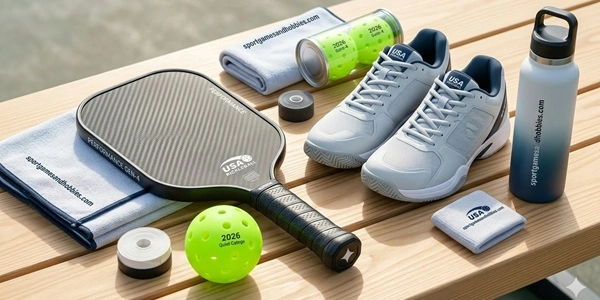
Pickleball Gear
-
Paddles:
-
Gen-4 full-foam paddles with thermoformed perimeters are the gold standard. They provide pop, spin control, and vibration dampening to protect elbows.
-
Budget paddles wear out quickly—grit fades and control drops after ~20 hours.
-
-
Balls:
-
Outdoor: harder polymer, durable for concrete and asphalt.
-
Indoor: lighter, softer balls that bounce consistently on wooden or synthetic floors.
-
Tip: Replace balls after 60–80 hours of play to maintain spin and feel.
-
-
Footwear:
-
Court-specific shoes with lateral support and cushioning prevent ankle twists and knee strain.
-
Avoid running shoes; they don’t handle side-to-side movement well.
-
-
Accessories:
-
Wrist supports, gloves, or shock-absorbing paddle grips help reduce the risk of Pickleball elbow.
-
Pickleball: How to Play
-
Court Layout: 20×44 ft for both singles and doubles. Includes the “kitchen”, a 7-ft non-volley zone near the net.
-
Basic Shots: Dink, volley, serve, lob. Fast rallies reward reflexes and tactical positioning.
-
Gameplay: Usually short rallies; doubles dominates social and competitive play.
-
Beginner Tip: Focus on consistency before trying aggressive shots. Learning placement beats power early.
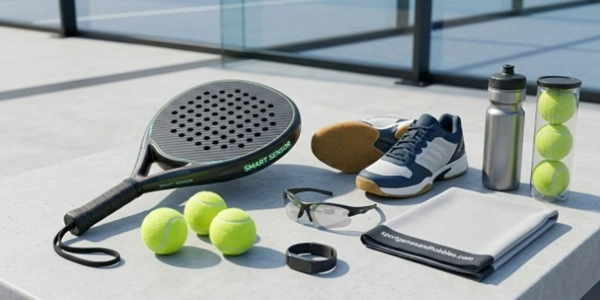
Padel Gear
-
Rackets:
-
18K carbon fiber rackets with EVA foam cores are standard for 2026 pros.
-
Perforations affect balance and swing weight; high-end rackets often include smart sensors to track smash velocity and impact location.
-
Maintenance: Avoid leaving rackets in hot cars—foam cores can deform and reduce rebound.
-
-
Balls:
-
Pressurized balls designed for Padel have lower bounce than tennis balls.
-
Replace every 3–4 matches to maintain play quality.
-
-
Footwear:
-
Padel-specific shoes with turf grip and lateral support are essential for quick pivots and wall rebounds.
-
-
Protective Gear:
-
Eye protection is recommended, especially for beginners, due to fast rebounds off glass walls.
-
Padel: How to Play
-
Court Layout: 20×10 m doubles-only courts, surrounded by glass and steel walls.
-
Scoring: Same as tennis; matches are doubles-only at the professional level.
-
Key Shots: Smash, bandeja, wall rebounds, volleys. Understanding wall angles is critical.
-
Gameplay Strategy: Positioning and teamwork are more important than pure power. Rallies can last 3x longer than Pickleball.
-
Beginner Tip: Master wall play before attempting smashes. Footwork and court awareness come first.
Common Beginner Mistakes: Avoid These Pitfalls
Even if you have the best intentions, small mistakes can slow progress or lead to injury. Here’s what beginners often get wrong:
Pickleball
-
Buying ultra-cheap paddles – Many budget paddles lose surface grit quickly, reducing spin and control. Players can feel frustrated and risk elbow strain from stiff, low-quality cores.
-
Ignoring footwear – Court shoes with poor lateral support increase the risk of ankle and knee injuries. Pick shoes with good grip and cushioning designed for court sports.
-
Skipping warm-ups – Quick reflexes are great, but jumping straight into play increases risk of shoulder, wrist, or elbow injuries. Even 5–10 minutes of dynamic stretches can make a difference.
Padel
-
Leaving rackets in hot cars – EVA foam and carbon layers degrade under heat, reducing rebound and lifespan. A warped racket can also affect swing consistency.
-
Underestimating cardio demand – Extended rallies and wall rebounds make padel surprisingly intense. Beginners often fatigue quickly, leading to sloppy technique or higher injury risk.
-
Smashing before mastering wall play – Jumping straight to aggressive shots without understanding wall angles can lead to missed shots, frustration, or collisions with glass. Focus on positioning first.
✅ Takeaway: Investing in quality gear, warming up, and pacing yourself will accelerate improvement and reduce risk—whether you’re hitting dinks or smashing off the glass.
Choose Your Path: Quick Lifestyle Checklist
Answer honestly—check the boxes that match your priorities.
Pickleball — The Social, Fast-Access Sport
[ ] I want to walk to a public park or nearby court and start playing immediately.
[ ] I prefer low recurring costs (gear + court fees under ~$600/year).
[ ] I enjoy meeting new players every session and casual social play.
[ ] I like short, fast rallies and reflex-based gameplay.
If most boxes fit → Pickleball likely matches your lifestyle.
Padel — The Tactical, Club-Oriented Sport
[ ] I enjoy structured doubles with the same group of 3 friends.
[ ] I’m comfortable budgeting $200+ per month for court fees, memberships, and balls.
[ ] I want longer rallies and strategic play using walls and angles.
[ ] I prefer a premium club environment and post-game social rituals (coffee, networking).
If most boxes fit → Padel likely matches your lifestyle.
✅ Tip: You can mix and match! Some players enjoy both—pickleball for casual drop-in sessions, padel for weekend strategy sessions with friends.
Frequently Asked Questions (FAQ)
1. What is the main difference between Pickleball and Padel?
Pickleball is fast, social, and played on smaller public courts with short rallies. Padel is doubles-only, uses walls strategically, and is mostly played in enclosed club courts with longer, tactical rallies.
2. How much does it cost to play each sport regularly?
-
Pickleball: ~$600–$830/year (gear, balls, court fees)
-
Padel: ~$3,370–$3,800/year (club membership, carbon racket, balls, court time)
3. What gear do I need to get started?
-
Pickleball: Gen-4 paddle, 60 balls/year, court shoes, optional wrist support
-
Padel: 18K carbon racket, pressurized balls, Padel shoes, protective eyewear
4. How do I avoid injuries when starting out?
-
Pickleball: Warm up, wear proper court shoes, and avoid ultra-cheap paddles that vibrate excessively
-
Padel: Master wall play before smashing, monitor cardio, and protect eyes from fast rebounds
5. Can I play both sports, or should I pick one?
Many players mix both: Pickleball for casual, quick sessions and social interaction; Padel for structured doubles and tactical play with consistent friends. Your lifestyle and budget usually guide the primary choice.
6. What are the key skills I should learn first?
-
Pickleball: Dinks, volleys, serves, and placement over power
-
Padel: Wall rebounds, positioning, teamwork, and angle control before attempting smashes
7. How do court and infrastructure affect accessibility?
-
Pickleball: Courts often repurposed from tennis; easy to find and expand in municipalities
-
Padel: Requires steel-and-glass enclosures; limited urban locations and higher installation costs
8. Are there professional opportunities for each sport?
-
Pickleball: Growing domestic pro tours, prize pools up to $50k, mainly in North America
-
Padel: Mature international circuits, ranking points, and academies in Europe and Latin America
9. How should I maintain my equipment?
-
Pickleball: Check paddles for delamination or worn grit; replace every 1–2 seasons
-
Padel: Avoid heat exposure; inspect foam cores and carbon layers for cracks or deformation
10. How do I decide which sport fits my lifestyle?
Use the lifestyle checklist: Pickleball if you want fast, social, low-cost access. Padel if you want structured doubles, tactical depth, and a club experience. Many players enjoy a combination depending on mood and schedule.
The Real Decision in 2026
The difference between pickleball and padel isn’t just sound, spin, or glass walls. It’s friction, cost, physical load, and social architecture. Pickleball lowers barriers and encourages spontaneity. Padel raises commitment and delivers structured intensity.
Both are legitimate athletic disciplines. Both are expanding. But sustainability is personal. Try each for several weeks. Track what it costs you—in money, time, and recovery. Notice who you meet. Notice how you feel the next morning.
In the end, the sport that fits your rhythm—not the one trending louder—is the one you’ll still be playing years from now.
Sources
-
Sports & Fitness Industry Association Participation Report 2025 – https://www.sfia.org
-
International Padel Federation – https://www.padelfip.com
-
USA Pickleball Equipment Standards – https://usapickleball.org